
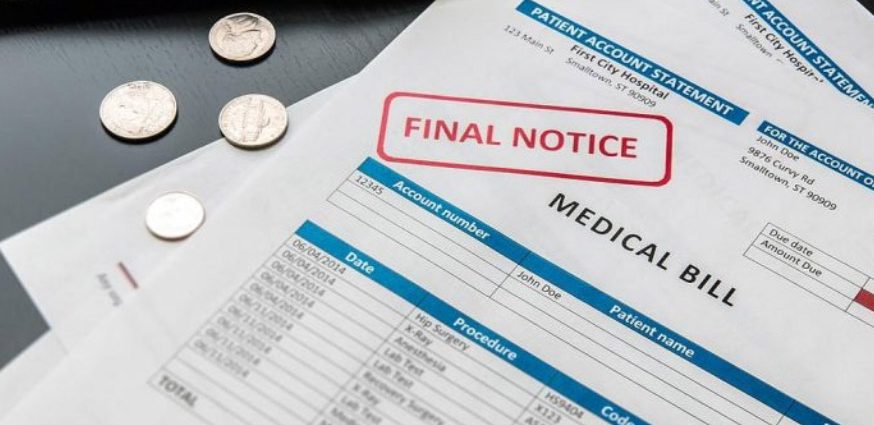
The Trump administration is moving forward with efforts to reverse state-level protections that previously prevented medical debt from showing up on consumer credit reports.
This policy shift has the potential to affect millions of Americans who are currently dealing with outstanding medical bills.
According to reporting by The Associated Press, the Consumer Financial Protection Bureau (CFPB) has created a draft rule that would grant the federal government exclusive control over debt reporting regulations for major credit bureaus including Equifax, Experian, and TransUnion.
Should the rule be finalized, it would supersede more than a dozen state laws—including those in New York and Delaware—that currently prohibit the inclusion of medical debt on consumer credit reports.
The proposed regulation would also dismantle Biden-era policies that provided states with the authority to establish their own safeguards. According to the CFPB, Congress aimed to create “national standards” through the Fair Credit Reporting Act (FCRA), and state laws undermine that objective.
Medical debt ranks among the most frequently contested items appearing on credit reports. The lengthy processing time for insurance claims often results in patients receiving unexpected bills that negatively impact their credit scores before payment disputes can be resolved.
The three major credit bureaus had previously reached an agreement to cease reporting unpaid medical debts below $500, a change that eliminated roughly 70% of medical debts from credit files.
However, some states took more comprehensive action by prohibiting the practice altogether.
Americans collectively hold an estimated $220 billion in medical debt, according to data from the Kaiser Family Foundation (KFF). In several Republican-led states — including Mississippi, Georgia, South Dakota and West Virginia — roughly one in six adults has outstanding medical bills.
Such debt can hinder access to financial products, making it more difficult for individuals to secure loans, credit cards or home mortgages.
The Consumer Financial Protection Bureau did not immediately return a request for comment from the Associated Press regarding the proposed rule.