
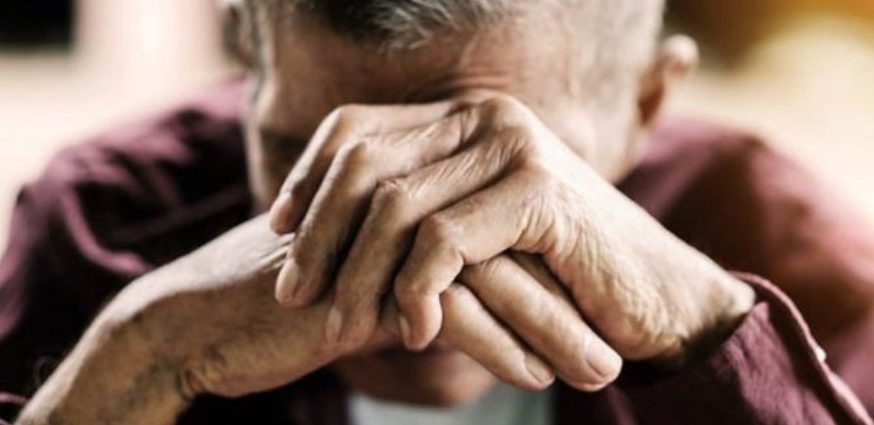
As U.S. suicide rates continue rising, new government data shows older men have become the most vulnerable group.
In a report published Wednesday, researchers from the U.S. Centers for Disease Control and Prevention found there were approximately 30 suicide deaths for every 100,000 men aged 55 and older in 2021. That number is more than double the overall rate of just over 14 suicide deaths per 100,000 people that year.
The older a man, the greater his suicide risk: Those 85 and older experienced 56 suicide deaths per 100,000 people, a statistic that surpassed any other age group.
Understanding the Risk Factors
Suicide is complex, Dr. Yeates Conwell, a psychiatry professor at the University of Rochester, told CNN.
Five factors can fuel suicide risk—depression, disease, disability, disconnection, and deadly means—and these risk factors can be “relatively more salient for older adults,” he explained.
Conwell, who also leads a geriatric psychiatry program and co-directs the university’s Center for the Study and Prevention of Suicide, stated: “Imagine a Venn diagram with these five circles, each representing one of those ‘Ds’ that overlap. The more of the intersecting circles one is in, the greater the risk.”
A combination of more physical illness and disability, along with increased social isolation and more loss, leaves older adults more vulnerable to suicide, he explained.
Gender Differences
Even so, older women seem less susceptible to suicide than their male peers.
While the suicide rate among older women has increased over the past two decades, it remains far below the rate among older men. There were approximately 6 suicide deaths per 100,000 women aged 55 and older in 2021, according to the new report.
The Role of Firearms
Firearms may be fueling this gender difference, experts suggest.
More than half of suicides involve guns, but firearms are an even more common method among older men, used in at least three-quarters of suicides among men 65 and older in 2021, the report found.
Men are also more likely than women to own a gun, and seniors are more likely to have a gun in the household, according to a survey from Pew Research Center. Additionally, nearly all suicide attempts using guns are fatal, making them the most lethal means of suicide.
Men have “greater comfort with and access to firearms,” Conwell noted, probably because they’re more likely to have military training or hunting experience.
Cultural and Social Factors
Men are also more vulnerable to a less tangible factor, Conwell observed.
He explained: “Older men in our society tend not to have the skills in developing and maintaining close relationships with as many other people as do women in our culture. There’s too much identity tied up in one’s work, so that is lost [after retirement]. And then there’s the cultural script of what maleness means in in our culture, so men just won’t admit or won’t receive care for depression because of that sense that it’s somehow not what a man does.”
If you or someone you know is experiencing a suicidal crisis or emotional distress, call the Suicide and Crisis Lifeline at 988. It is available 24 hours a day.